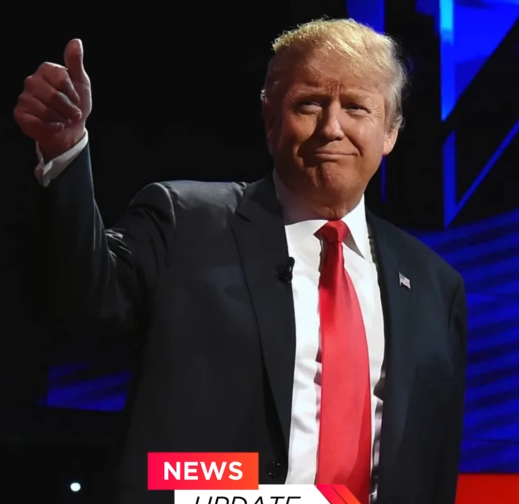
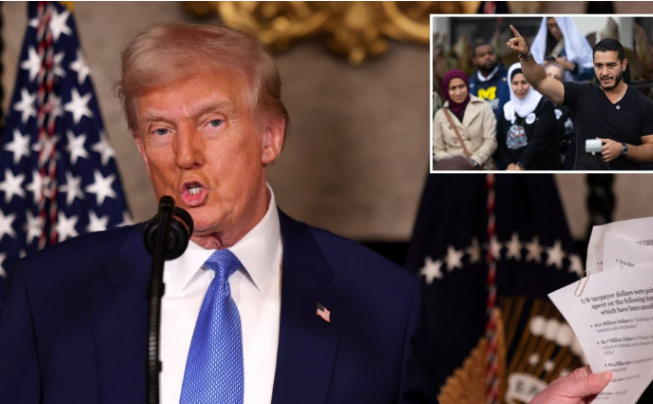
WASHINGTON — Donald Trump signaled firm support for a federal ban on Sharia law during an interview with conservative commentator Glenn Beck, reviving a contentious national debate over religious freedom and constitutional supremacy.
When asked by Beck whether he would push for or sign a federal "no-Sharia law act," Trump stated he would "absolutely" support prohibiting it, asserting that the nation must operate under a unified legal framework.
"On Sharia law, I would absolutely say that’s not this country," Trump said, adding that authorities must maintain "one system."
While Trump’s remarks drew sharp political reactions, legal scholars note that translating such rhetoric into federal statute presents substantial constitutional hurdles.
The Constitutional Landscape
Under existing American jurisprudence, the U.S. Constitution and statutory law already serve as the sole supreme legal authority. Federal and state courts are bound by constitutional principles, and religious edicts cannot supersede domestic civil or criminal statutes.
Religious communities—including churches, synagogues, and mosques—routinely establish internal rules for voluntary adherents. However, these practices remain strictly private and lack sovereign standing to displace secular law.
Legal precedent indicates that a federal measure explicitly targeting Islam would face immediate First Amendment challenges:
-
The Oklahoma Precedent: In 2010, Oklahoma voters approved State Question 755 to prohibit state courts from considering Sharia or international law. Federal courts enjoined the measure before it took effect, with the Tenth Circuit Court of Appeals affirming that singling out a specific faith violated the Establishment Clause.
Neutrality Requirements: Under the First Amendment, the government may enforce generally applicable criminal and civil laws against conduct—such as fraud, coercion, or abuse—regardless of religious claims. However, it cannot target the beliefs or private observances of a single faith.
Scope of Practice: For millions of observant Muslims, Sharia encompasses personal ethical and devotional obligations—such as prayer, dietary standards, charitable giving, and private dispute mediation—analogous to Jewish halakha or Catholic canon law.
To withstand judicial review, any potential legislation would likely need to be drafted as a religion-neutral statute prohibiting foreign or religious arbitration from undermining constitutional protections, rather than an explicit ban on Islam.
Political Fallout in Key Senate Contest
Trump’s comments land amid an already heated U.S. Senate race in Michigan, a critical battleground for control of the upper chamber.
Republican leaders, including Vice President JD Vance, have repeatedly targeted Democratic nominee Dr. Abdul El-Sayed over his past comments on anti-Sharia legislation. Vance has claimed El-Sayed advocates for Sharia law in the United States and views its opponents through the lens of racial animus.
El-Sayed, a physician and former Detroit health director, has pushed back against those characterizations, arguing that personal religious practice is protected under the First Amendment and does not conflict with adherence to U.S. civil law:
"Nobody is trying to impose Sharia on other Americans," El-Sayed stated in a recent interview, comparing personal Islamic observances to Christian canon law.
Fact-checkers have noted that while El-Sayed opposed measures like the Oklahoma amendment and adheres to Sharia-compliant personal finance, there is no evidence he has ever advocated replacing secular American governance with religious law.
Slogan vs. Enforceable Policy
As of now, the Trump administration has not released formal legislative text, an executive order, or specific statutory language outlining how such a ban would be structured or enforced.
Lawmakers face a central dilemma: a measure that merely reaffirms constitutional supremacy duplicates existing law, while a statute explicitly banning Islamic religious practices would directly conflict with the First Amendment. Whether congressional allies attempt to codify the proposal into workable legislation remains the key test ahead.